
For someone smoking a premium cigar for the first time, the ritual can seem more complicated than it really is.
Before the first draw, there are two essential steps: cutting the cigar correctly and lighting it properly.
A clean cut gives the cigar the airflow it needs. A careful light helps the tobacco burn evenly and allows you to experience the character of the cigar without rushing the process.
The good news is that neither technique requires years of experience.
You simply need the right tools, a little patience, and an understanding of what you are actually trying to accomplish.
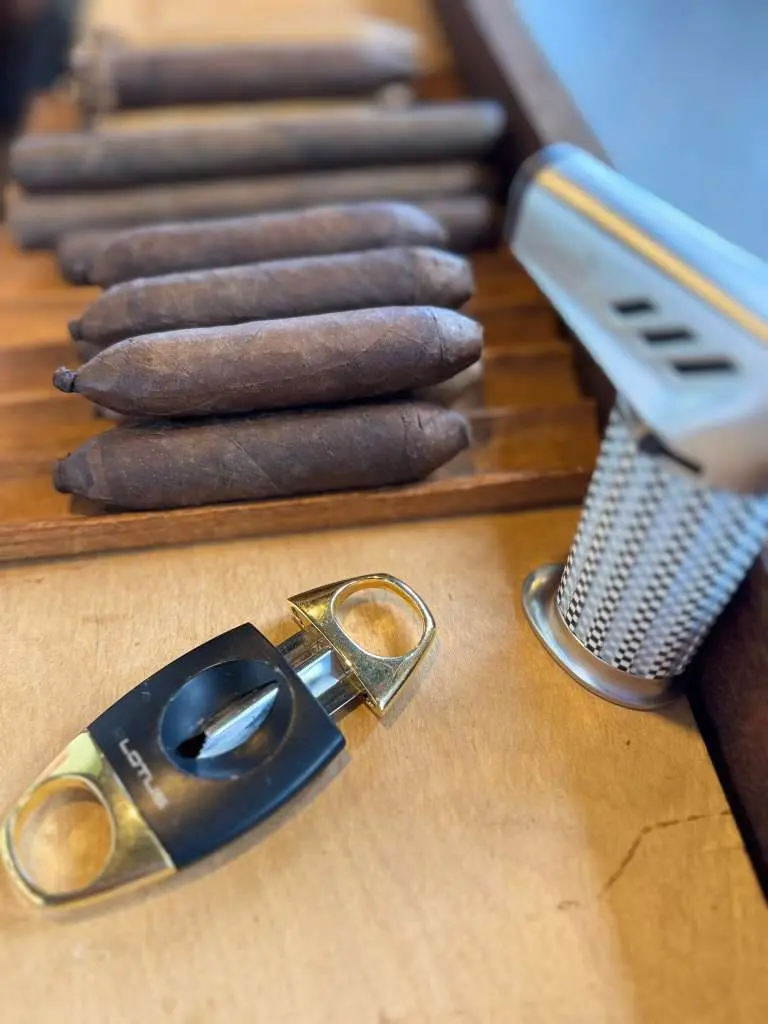
If you are completely new to cigars, you may also want to start with our beginner’s guide to the smoking experience:
🔗 How Do You Smoke a Cigar for the First Time? A Beginner’s Guide
What Part of the Cigar Do You Cut?
A handmade cigar has two different ends.
The foot is the end that is lit.
The head is the end that goes into your mouth. On most premium cigars, the head is closed with a small piece of wrapper leaf known as the cap.
The purpose of cutting is to remove enough of that cap to create a clean opening while keeping the cigar’s construction intact.
You do not want to cut deeply into the body of the cigar.
A cut that is too shallow can restrict the draw. A cut that is too deep can damage the wrapper and potentially cause the cigar to unravel.
The key is finding the transition between the rounded cap and the straighter body of the cigar. This area is commonly referred to as the shoulder.
🔗 Cigar Aficionado’s Cutting and Lighting Guide
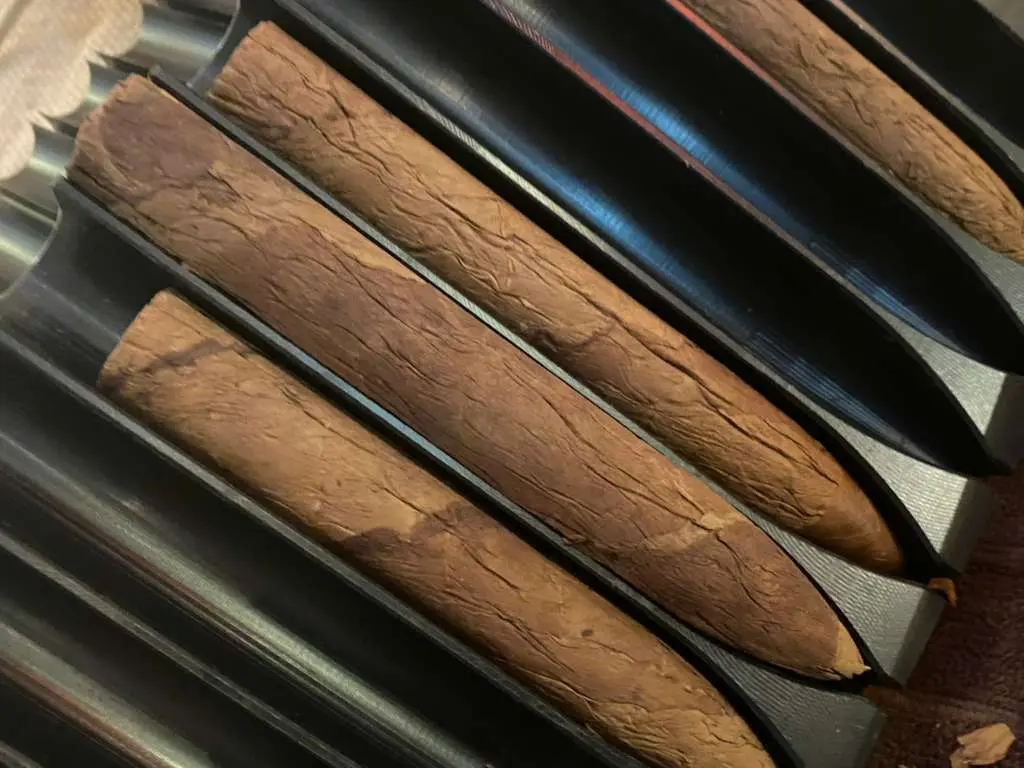
Which Cigar Cutter Should a Beginner Use?
There is no single cutter that every cigar smoker must use.
The three most common options are the straight cutter, V-cutter, and punch cutter.
Straight or Guillotine Cutter
A guillotine cutter uses one or two blades to make a straight cut across the head.
For beginners, a sharp straight cutter is an excellent place to start because the technique is simple and easy to understand.
The important part is not to repeatedly nibble at the cap.
Position the cigar carefully, then make one clean, confident cut.
A sharp blade is particularly important. A dull cutter can crush or tear the wrapper instead of making a clean incision.
V-Cutter
A V-cutter creates a V-shaped channel in the head of the cigar.
Some smokers enjoy the way this changes the draw and concentrates the opening.
It can be useful, but it requires attention to depth because a V-cut can penetrate farther into the cigar than a shallow straight cut.
Punch Cutter
A punch cutter removes a small circular section from the center of the cap rather than slicing across the entire end.
It preserves more of the cap and can be convenient for certain cigar shapes.
However, not every cigar is suitable for a punch.
For your first cigar, a quality straight cutter is usually the easiest option to learn.
How to Cut a Cigar Properly
Once you have selected your cutter, the process is straightforward.
1. Identify the cap
Look carefully at the head of the cigar.
You should be able to see where the cap transitions into the body. This gives you a visual reference for where to make your cut.
2. Position the cutter
Place the head into the cutter so that the blades are positioned at the appropriate point on the cap.
When in doubt, remove less rather than more.
You can always make the opening slightly larger if necessary. You cannot put the removed wrapper back.
3. Make one clean cut
Close the cutter firmly and decisively.
Avoid slowly squeezing the blades through the cigar or making several small cuts.
The objective is a clean, smooth opening with minimal damage to the wrapper.
4. Inspect the result
Look at the cut.
The edge should be clean, without major tears or loose pieces of wrapper.
You can also take a gentle, unlit draw to check the airflow.
It should feel natural—not extremely tight and not excessively open.
What Happens If You Cut a Cigar Too Deep?
One of the most common beginner mistakes is removing too much of the cap.
The cap helps hold the wrapper and the cigar’s construction together at the head.
If you cut below the appropriate area, the wrapper can begin to unravel.
You may also expose more tobacco than necessary and make the cigar less comfortable to smoke.
That is why a conservative first cut is usually the safer approach.
A good cigar cutter should make the process precise rather than forceful.
How Do You Light a Cigar Properly?
Lighting a cigar is different from lighting a cigarette.
The objective is not simply to put the flame against the tobacco until it catches.
Instead, you want to gently toast the foot and bring the tobacco to an even ignition.
This is particularly important with premium handmade cigars because the way the foot is heated can affect how evenly the cigar begins to burn.
A butane cigar lighter is a practical option because it provides a clean flame and good control. Some cigar smokers also prefer matches or cedar spills.
The tool matters less than the technique.
The most important principle is simple:
Do not rush the light.
🔗 Cigar Aficionado’s Guide to Lighting a Cigar With a Butane Lighter
Step-by-Step: How to Light a Cigar for Beginners
1. Hold the cigar correctly
Hold the cigar comfortably between your fingers.
Position the foot near—but not buried inside—the flame.
You want to heat the tobacco gradually rather than aggressively burning it.
2. Toast the foot
Begin rotating the cigar slowly.
The goal is to warm the entire circumference of the foot.
You may notice the tobacco beginning to darken and eventually glow.
Do not rush to take a large draw.
🖼️ [IMAGE 4 — INSERT HERE]
Concept: Close-up of a premium cigar being gently toasted over a controlled flame, showing the foot beginning to glow.
Filename: how-to-toast-cigar-foot.jpg
ALT: Premium cigar being gently toasted before lighting
3. Begin gentle draws
Once the foot has been properly toasted, place the head of the cigar in your mouth.
Take a gentle draw while continuing to rotate the cigar near the flame.
You are helping the heat reach the tobacco evenly.
There is no reason to pull aggressively.
4. Check the entire foot
Remove the cigar from the flame and examine the foot.
Ideally, the burn should be reasonably even around the circumference.
If one section has not caught, you can gently touch that area with the flame while rotating the cigar.
The goal is an even light, not a dramatic flame.
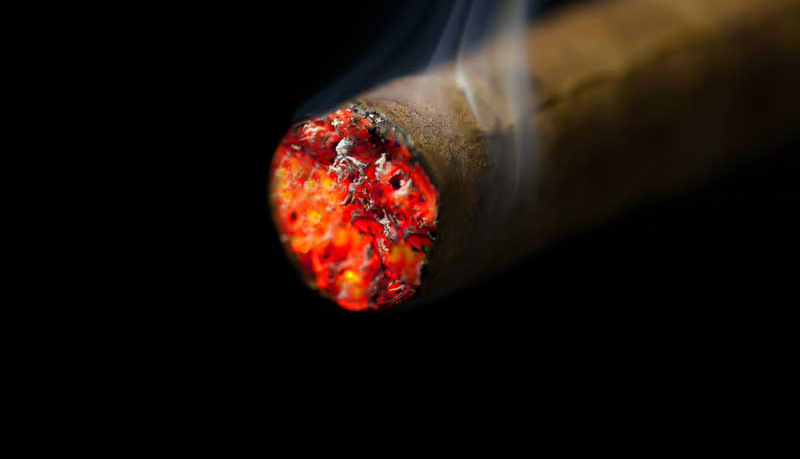
Should the Flame Touch the Cigar?
This is one of the most useful distinctions for beginners.
You do not need to bury the cigar directly inside the flame.
Instead, use the heat from the flame to toast the tobacco gradually.
This gives you greater control and helps avoid unnecessarily scorching the tobacco or wrapper.
The same principle applies whether you are using a torch or a softer flame: control the heat rather than attacking the cigar with it.
The lighting process should feel deliberate.
That is part of the experience.
What Is the Best Lighter for a Cigar?
There is no single lighter that every cigar smoker prefers.
Common options include:
Butane torch lighter
A torch produces a concentrated flame and is especially useful outdoors or in windy conditions.
It is precise, but beginners should be careful not to hold the flame too aggressively against the tobacco.
Soft-flame lighter
A soft flame provides a gentler source of heat and can give the smoker more time to toast the foot gradually.
Matches or cedar spills
Some experienced smokers enjoy the ritual of using matches or cedar spills.
The important thing is to avoid rushing the process and to keep the flame under control.
Your choice of lighter is ultimately personal.
Your technique matters more than the accessory.
Common Mistakes When Cutting and Lighting a Cigar
Cutting too much
This is probably the easiest mistake to avoid.
Start conservatively and inspect the result.
Using a dull cutter
A dull blade can crush the cap and tear the wrapper.
A sharp cutter makes a significant difference.
Cutting with hesitation
Repeated small cuts can create unnecessary damage.
A clean, decisive motion is preferable.
Lighting only one side
If the foot is not evenly heated, the cigar may begin burning unevenly.
Take your time and rotate it.
Holding the flame directly against the tobacco
You are trying to toast and ignite the cigar—not scorch it.
Use the flame with control.
Puffing too aggressively
More flame and bigger puffs do not mean a better cigar experience.
Slow down.
A premium cigar is designed to be enjoyed at a measured pace.
What If the Cigar Does Not Light Evenly?
Don’t panic.
An uneven start does not necessarily mean the cigar is ruined.
First, allow the cigar to stabilize and observe the burn.
If a small section remains unlit, you can gently touch that area with the flame while rotating the cigar.
The important thing is not to keep applying excessive heat.
If you approach the problem patiently, small corrections are usually much easier than trying to relight the entire cigar aggressively.
Cutting and Lighting Are Part of the Craft
A premium cigar represents the work of growers, rollers, blenders, and craftspeople.
For a Master Torcedor like Antonio Cortada, the cigar is not simply something to light and smoke.
It is the result of a traditional process involving tobacco selection, preparation, rolling technique, and craftsmanship.
That is why learning how to cut and light a cigar properly is more than a technical exercise.
It is part of understanding the object you are holding.
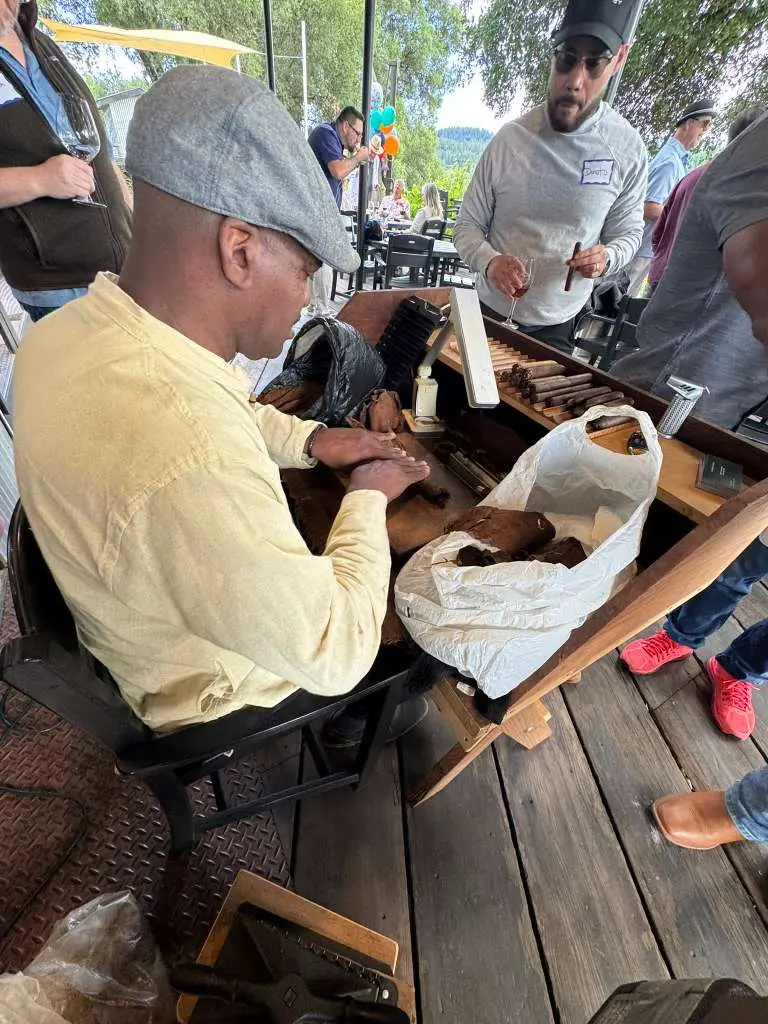
Antonio’s experience as a Cuban Master Torcedor gives him a first-hand connection to the traditional craftsmanship behind the cigar—knowledge that becomes particularly meaningful when guests can see the process happening in front of them.
From Learning About Cigars to Experiencing the Craft
Reading about cigars is one way to understand the tradition.
Seeing the craft performed in person is something else entirely.
Antonio Cortada brings live cigar rolling to weddings, corporate gatherings, golf events, private celebrations, and other premium occasions, creating an experience where guests can interact with the craftsmanship rather than simply hearing about it.
🔗Live Cigar Rolling / Services
For event hosts and planners, the appeal is not simply the cigar itself.
It is the combination of craftsmanship, interaction, storytelling, and hospitality.
That is what turns cigar rolling into an experience.
FAQ
How much should you cut off a cigar?
Usually, you only need to remove enough of the cap to create a comfortable opening while keeping the cigar’s structure intact. The exact amount varies with the cigar’s shape and construction, so identifying the cap and shoulder is more useful than relying on a fixed measurement.
What is the best cigar cutter for a beginner?
A sharp straight or guillotine cutter is generally the simplest option for a beginner because it is straightforward to position and use. V-cutters and punch cutters are also legitimate options, but they create different openings.
Should you toast a cigar before lighting it?
Yes. Gently toasting the foot before taking stronger draws helps heat the tobacco progressively and encourages a more even ignition.
Can you use a regular lighter to light a cigar?
A clean-burning butane lighter is a practical choice, but the technique matters more than having a particular model. Keep the flame controlled and avoid unnecessarily scorching the tobacco.
What happens if you cut a cigar too much?
Removing too much of the cap can damage the cigar’s construction and may cause the wrapper to unravel. When learning, it is safer to make a conservative cut.
What should you do if a cigar lights unevenly?
Observe the burn first. If one section remains unlit, gently apply heat to that area while rotating the cigar. Avoid aggressively applying the flame to the entire foot.
Want to experience the craft in person?
Looking to add an authentic Cuban cigar rolling experience to your next event? Explore Antonio Cortada’s live cigar rolling experiences and discover how traditional craftsmanship can become part of a memorable wedding, corporate gathering, golf event, or private celebration.