
Trying a cigar for the first time can feel intimidating. How do you cut it? How do you light it? Are you supposed to inhale? How quickly should you smoke it?
The good news is that enjoying a premium cigar doesn’t require complicated knowledge.
Understanding a few basic principles of how to smoke a cigar for the first time can make the experience much more relaxed — and help you appreciate the craftsmanship behind a traditionally hand-rolled cigar.
Important: Cigars contain tobacco and nicotine, and cigar smoke contains harmful chemicals. Cigar use carries health risks, including cancer and cardiovascular and respiratory risks. People who do not use tobacco should not start. CDC
For adults who already choose to smoke cigars, here’s what to know.
What Should You Know Before Smoking a Cigar?
A premium hand-rolled cigar is more than simply tobacco wrapped into a cylinder.
A traditional cigar is constructed from different tobacco leaves that perform different functions. The filler forms the interior, the binder holds the filler together, and the wrapper is the outer leaf.
The USDA recognizes these three traditional classifications for cigar tobacco, while the Smithsonian also documents how different parts of the tobacco plant can be selected for wrapper, binder and filler. EsMiS
That construction affects the cigar’s:
- draw
- burn
- aroma
- texture
- strength
- overall smoking experience
This is one reason learning about cigars can make the experience considerably more interesting.
1. Choose a Cigar That Matches Your Experience
If this is your first cigar, don’t automatically choose the largest or strongest cigar available.
A beginner may prefer a cigar with a milder or medium profile and a size that doesn’t require an extremely long smoking session.
The right cigar depends on several factors:
- strength
- size
- shape
- tobacco blend
- personal preference
- available smoking time
This is also where the advice of an experienced cigar professional can be valuable.
At Antonio Cortada’s events, guests can experience the craftsmanship of hand-rolled cigars and learn directly from a Master Torcedor from Pinar del Río, Cuba.
Learn more about Antonio’s story and cigar-rolling tradition
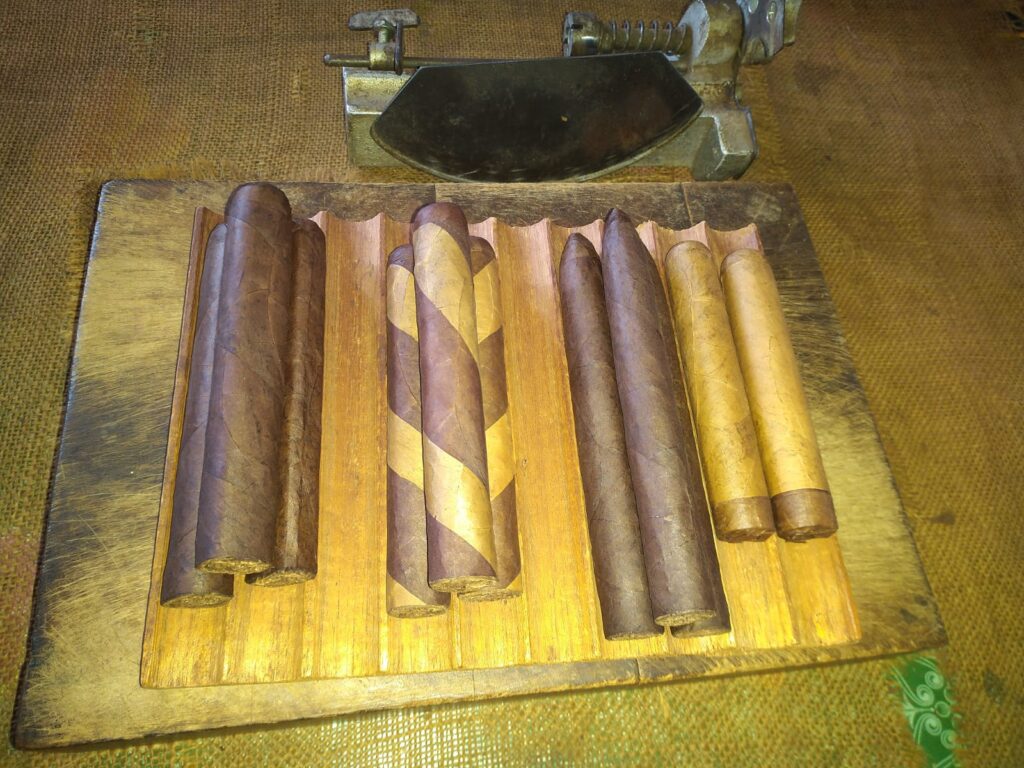
2. Cut the Cigar Correctly
Most premium cigars have a closed head that needs to be cut before smoking.
The goal isn’t to remove a large portion of the cigar.
The goal is to create an opening that allows air to move through the cigar while keeping the wrapper intact.
A clean cut is important because an overly aggressive cut can damage the wrapper and affect the cigar’s construction.
For beginners, a quality cigar cutter and a controlled cut are generally more important than trying to make the perfect cut.
3. Check the Draw Before Lighting
Once the cigar has been cut, take a gentle draw before lighting it.
You’re checking the airflow.
A good draw should allow air to move without requiring excessive effort.
If the draw is extremely tight, the cigar may be difficult to smoke. If it is excessively loose, it may burn differently than expected.
This is one of the subtle details that experienced torcedores learn to control during the construction of a cigar.
4. Light the Cigar Slowly
Lighting a premium cigar isn’t a race.
Use a flame appropriate for cigar lighting and allow the foot of the cigar to warm gradually.
Rather than immediately placing the flame directly against the tobacco, rotate the cigar and allow the heat to reach the outer edge evenly.
The objective is an even start to the burn.
Once the foot is glowing evenly, take a gentle draw and continue rotating the cigar as necessary.
5. Don’t Inhale Cigar Smoke
One of the biggest questions beginners ask is:
Are you supposed to inhale a cigar?
Cigar smoking traditionally differs from cigarette smoking, and cigar smokers generally do not inhale the smoke into their lungs.
However, not inhaling does not make cigar smoking safe.
The National Academies’ review of premium cigars notes that cigar smoke contains hazardous compounds and that exposure can occur even when smoke is not inhaled. NCBI
For that reason, people who don’t currently use tobacco should not begin smoking cigars.
6. Slow Down and Pay Attention
One of the biggest mistakes beginners make is smoking a cigar too quickly.
A premium cigar is generally approached as a slower experience.
Take occasional draws rather than continuously smoking.
Pay attention to:
Aroma
What do you notice before and during the draw?
Flavor
Do you notice earth, spice, wood, sweetness or other characteristics?
Burn
Is the cigar burning evenly?
Texture
Does the smoke feel light, creamy, dry or intense?
You don’t need to identify dozens of tasting notes.
Start with what you actually notice.
7. Don’t Smoke the Cigar Until It Burns Out
A cigar doesn’t need to be finished completely.
If the cigar becomes too hot, unpleasant or simply reaches the point where you are finished, allow it to go out naturally.
There’s no requirement to smoke every last inch.
The experience is more important than finishing the cigar.
What Is Cigar Etiquette for Beginners?
If you’re smoking at a private gathering, wedding, country club or corporate event, remember that you’re sharing the environment with other guests.
Good cigar etiquette includes:
- Follow the venue’s smoking rules.
- Respect designated smoking areas.
- Be conscious of people who don’t smoke.
- Avoid blowing smoke toward other guests.
- Don’t ash carelessly.
- Use the provided ashtrays.
- Never assume everyone wants to participate.
This is particularly important at luxury events where cigar rolling is incorporated as part of the overall guest experience.
What Makes a Hand-Rolled Cigar Different?
This is where the craft becomes particularly interesting.
A skilled torcedor isn’t simply wrapping tobacco around filler.
The construction, leaf selection, rolling technique and consistency all influence the final cigar.
Antonio Cortada comes from a family tradition connected to cigar craftsmanship in Pinar del Río, Cuba, and brings that Cuban cigar-rolling tradition to private events throughout California.
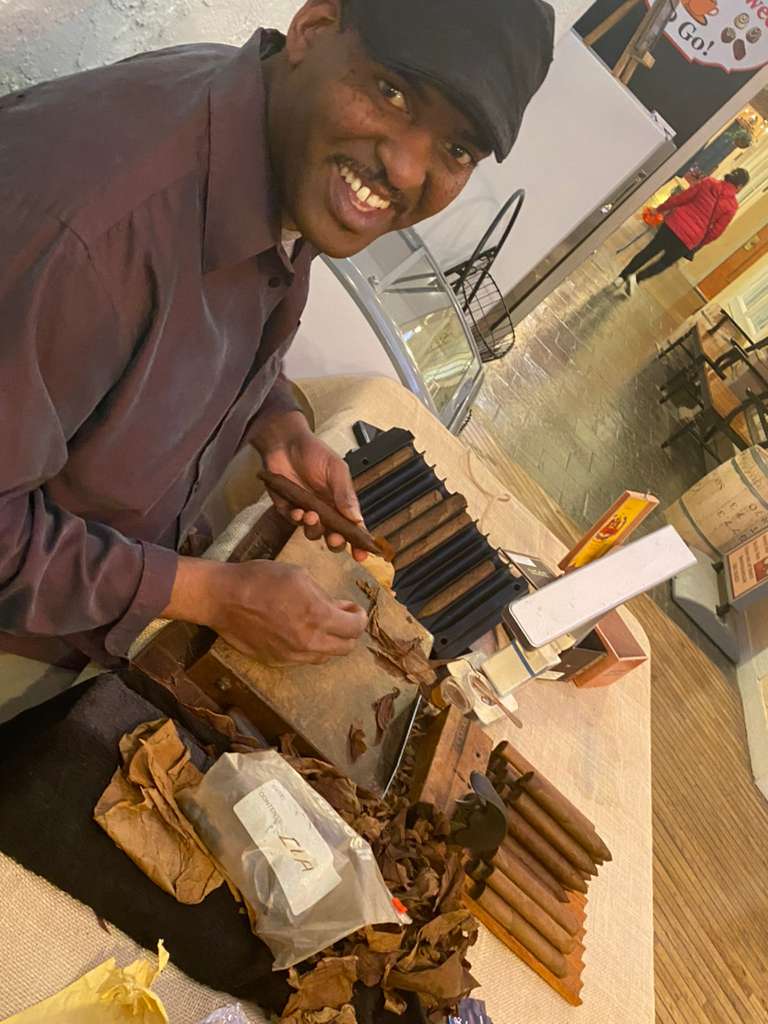
His work allows guests to see the process rather than simply receiving a finished cigar.
That distinction is important.
You’re not just experiencing a cigar. You’re experiencing the craftsmanship behind it.
Discover Antonio Cortada’s cigar rolling services
Want to See How a Cigar Is Actually Made?
Reading about cigar construction is one thing.
Watching a Master Torcedor transform tobacco leaves into a finished cigar is something completely different.
Antonio provides live cigar rolling experiences for:
- Weddings
- Corporate events
- Golf tournaments
- Winery events
- Private parties
- VIP gatherings
- Luxury celebrations
Guests can watch the process, interact with Antonio and experience traditional hand-rolling as part of the event.
Explore the live cigar rolling experience
Frequently Asked Questions
Do you inhale cigar smoke?
Cigar smokers traditionally do not inhale cigar smoke into the lungs. However, avoiding inhalation does not eliminate the health risks associated with cigar use. CDC
How long does it take to smoke a cigar?
Smoking time varies considerably depending on the cigar’s size, construction and smoking pace. Larger formats generally take longer than smaller cigars.
What is the best cigar for a beginner?
There is no universal “best” cigar for beginners. Strength, size, flavor profile and personal preference all matter.
Should you smoke a cigar quickly?
Generally, a cigar is approached slowly rather than smoked continuously. Smoking too quickly can make the experience unpleasant.
What does a cigar roller do?
A cigar roller, traditionally called a torcedor, hand-constructs cigars by working with tobacco leaves to create the filler, binder and wrapper.
Can I experience live cigar rolling at an event?
Yes. Antonio Cortada provides live cigar rolling experiences for private and luxury events throughout California.
Contact Antonio to discuss your event
Experience the Craft Behind the Cigar
A first cigar can raise a lot of questions.
But understanding the basics makes one thing immediately apparent: there is considerably more craftsmanship behind a hand-rolled cigar than most people realize.
For Antonio Cortada, that craftsmanship is part of a family tradition rooted in Pinar del Río and brought to today’s private events throughout California.
If you’d like your guests to experience that tradition firsthand, Antonio offers live cigar rolling for weddings, corporate gatherings, golf events, winery experiences and private celebrations.
Experience authentic Cuban cigar craftsmanship at your next private event.